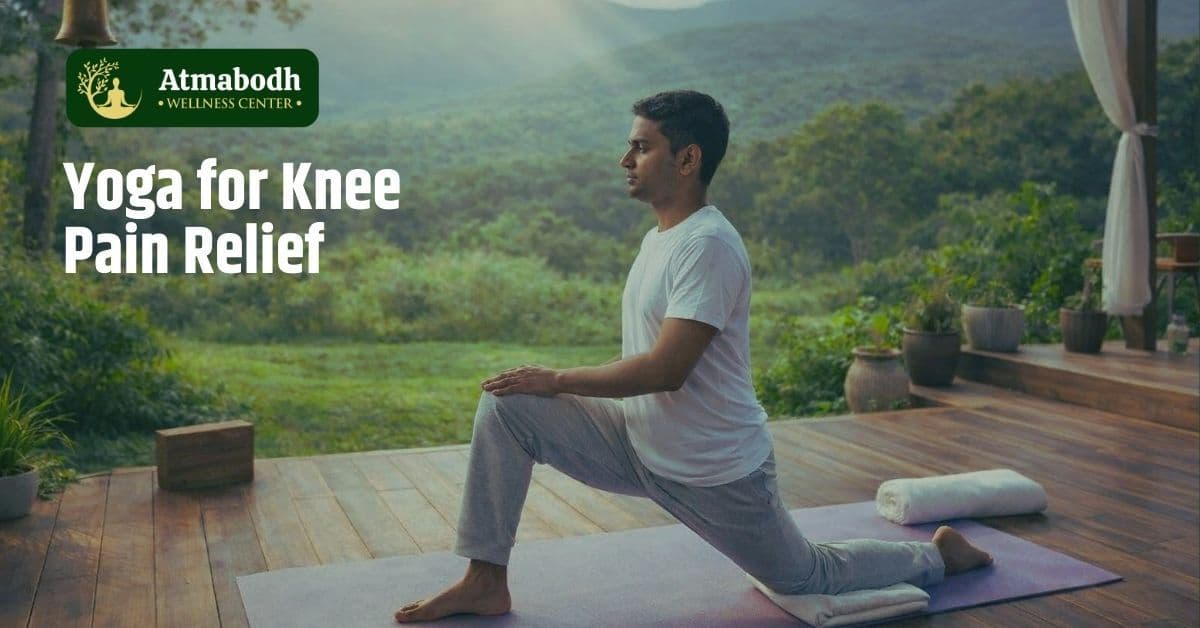
10 Yoga Poses to Relieve Knee Pain and Improve Flexibility
 Atmabodh Wellness
Knee pain is a common issue that affects people of all ages. It often develops due to overuse, injuries, or conditions such as arthritis. Because the knees support the body’s weight during most movements, they are especially prone to strain and stiffness. Yoga provides a gentle yet effective way to relieve knee pain, strengthen the supporting muscles, and improve flexibility. Regular practice can reduce discomfort, enhance mobility, and support long-term joint health.
1. Mountain Pose (Tadasana)
This foundational standing posture aligns the body, improves posture, and strengthens the muscles that stabilize the knees. By engaging the thighs and keeping the spine tall, it reduces unnecessary pressure on the joints.
2. Warrior I (Virabhadrasana I)
Warrior I strengthens the quadriceps, hamstrings, and calves while opening the hips. These actions build lower-body endurance and flexibility while supporting knee stability. Practicing with mindful alignment helps prevent strain.
3. Child’s Pose (Balasana)
This restorative pose releases tension in the thighs and knees while calming the body. It is especially useful for stiff joints, allowing the knees to rest in a supported position.
4. Tree Pose (Vrikshasana)
Tree Pose improves balance and strengthens stabilizing muscles in the legs. It promotes proper weight distribution and corrects muscular imbalances that often contribute to knee discomfort.
5. Downward-Facing Dog (Adho Mukha Svanasana)
This classic yoga pose stretches the hamstrings and calves while lengthening the spine. It distributes body weight evenly, relieving stress on the knees and improving flexibility.
6. Seated Forward Bend (Paschimottanasana)
This forward fold stretches the hamstrings and the back of the knees, easing stiffness. Practiced gently, it reduces tension in the joints and increases leg flexibility.
7. Bridge Pose (Setu Bandhasana)
Bridge Pose strengthens the glutes, hamstrings, and quadriceps—muscles essential for knee stability. It also opens the chest and spine while reducing strain on the joints.
8. Cat-Cow Pose (Marjaryasana–Bitilasana)
This gentle spinal flow improves circulation and warms up the body. The movement of flexion and extension mobilizes the knees and reduces stiffness, preparing the joints for deeper stretches.
9. Pigeon Pose (Eka Pada Rajakapotasana)
Primarily a hip opener, Pigeon Pose reduces tension that can transfer to the knees. By lengthening the hip muscles, it helps prevent misalignment and uneven pressure on the joints.
10. Corpse Pose (Savasana)
Every yoga session should end with Savasana. This relaxation pose allows the body to integrate the benefits of practice, releasing residual tension and encouraging long-term healing.
Safe Practice Tips
- Always listen to your body and avoid movements that cause sharp pain.
- Gentle yoga styles such as Hatha, Iyengar, restorative, and Yin yoga are ideal for people with knee concerns.
- Consult a doctor before starting if you have chronic or severe knee conditions.
Beyond Yoga
Along with regular practice, maintaining a healthy weight, eating a balanced diet, and following medical guidance can help manage knee discomfort more effectively. Yoga works best when combined with other recommended treatments for a holistic approach.
In Conclusion
Yoga is more than just exercise—it is a holistic approach to wellness. These 10 poses, when practiced regularly, can strengthen the muscles around the knees, improve flexibility, and promote joint health. With mindful practice and proper guidance, yoga becomes a sustainable way to manage knee pain naturally.
For personalized support, explore the residential wellness programs at Atmabodh Patanjali Wellness. To book a tailored retreat, email info@atmabodhwellness.com or call +91 9699740189.
Related Posts
How Naturopathy Can Transform Your Health at Atmabodh Wellness
Read more →
Personalized Wellness Retreat in Pune – Heal Body & Mind at Atmabodh
Peaceful nature-based wellness retreat at Atmabodh Wellness Center, Pune, offering Ayurveda, Yoga, and Naturopathy for personalized healing
Read more →